Friday, February 20, 2015
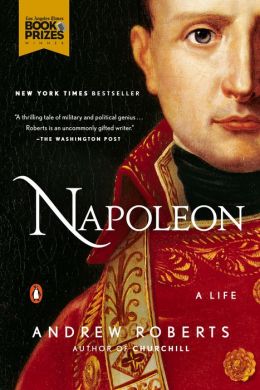
Book Review: Napoleon: A Life, by Andrew Roberts
There are few, if any, people about whom more books have been written
than Napoleon Bonaparte. Given the man's appropriately lauded
sociopolitical and legal achievements contrasted against the nearly
unimaginable brutality of the wars bearing his name, unsurprisingly
Napoleon's myriad biographers are divided between admirers and
detractors, the latter outnumbering the former. However, Andrew Roberts'
book, Napoleon: A Life, places the author firmly among Napoleon's
devotees. The linchpin of this book, as stated on its jacket, is that
Roberts "take[s] advantage of the recent publication of Napoleon's
thirty-three thousand surviving letters, which radically transform our
understanding of his character and motivation." Roberts interweaves his
subject's vast written commentary covering the entire spectrum from
mundane to meaningful against the backdrop of Napoleon's improbable rise
and meteoric collapse as militarist and politician in a short life that
still resonates loudly in our world today. Roberts paints the end of
Napoleon's career as attributable less to a clearly flawed character
than to trusting the wrong people and fighting the wrong battles badly.
("When Waterloo is war-gamed, France usually wins," says a footnote on
page 766.) Either way, the result reduced Napoleon from Emperor of
France and ruler of nearly all Europe to Britain's lonely prisoner, left
to die an outcast on a barren, isolated volcanic rock in the South
Atlantic, light years from Paris.


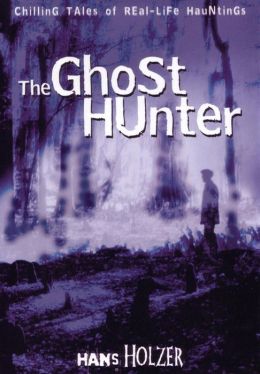
Book Review: The Ghost Hunter, by Hans Holzer
The technology-laden art of ghost-hunting commonly practiced today
(evidenced by the scads of popular ghost-hunting shows currently
haunting your cable television for all the 26 weeks on either side of
Halloween) is based largely on an extravagant array of exotic gadgets
calibrated to detect the piercing of our earthly veil by ethereal forces
otherwise immeasurable dispassionately. This "objective" approach was
first widely championed and documented by Briton Harry Price in his 1940
tome, The Most Haunted House in England, a classic in the field
examining the haunting of Borley Rectory in Essex. But there are more
ways than one to confront a wraith, as celebrated American spirit chaser
Hans Holzer demonstrates in his seminal 1963 (reprinted in new editions
in 2005 and 2014) work, The Ghost Hunter. Rather than depend on cold
engineering's electronic or mechanical fruits like Price and most
phantom finders currently on TV, Holzer's methodology relies on
selecting deft and trustworthy psychic mediums to accompany him on
investigations of locations squatted by specters along America's
northeast coast. Once ensconced in a haunted location, Holzer's
medium-du-jour allows herself to be commandeered by the wronged spirit
so the latter can speak the grievances that compel it to wreak eerie
havoc. The book's collection of reports is mostly entertaining,
sometimes enlightening, and Holzer's interventions usually (but not
always) lead to the elimination of spooky doings once the living
appropriately address the ghosts' gripes. Holzer's book teaches it may
be folly to assume people's quest for fairness in love and war is
constrained by mortal borders, and that a good medium gives any fancy
contraption a run for its money in tracking ghosts.

Sunday, January 25, 2015
Book Review: Ready to Hang: Seven Famous New Orleans Murders, by Robert Tallant
There are as many ways to learn a city as there are people interested in
learning it. Surely there's no substitute for learning a place than
being there. But if circumstances conspire to prevent being there, the
next best thing is reading about it, and a great way to learn about a
grand old city is to steep yourself in a fascinating collection
exploring some of the most (in)famous murders ever to darken its stormy
history. Robert Tallant's "Ready to Hang" is just such a collection.
Each of the seven well-written stories in this book reveals no less
about how New Orleans has evolved from past to present than it does
about the victims and victimizers it chronicles. Perhaps the most widely
known of the sinister killers in Tallant's book is the person (or
persons?) known as the Axman, whose enduring macabre allure lead to his
recent resurrection in a pivotal role on the hit television series
"American Horror Story: Coven." Notwithstanding the Axman's considerable
legend in the annals of unsolved serial murder, not even his gruesome
story outshines the other half-dozen true tales in this book. Did you
know the Mafia first sharpened its American hooks in New Orleans? You
will, and you'll learn why the practice of "decorating the lamp posts"
did much to drive the Mafia out of New Orleans into friendlier digs in
New York. Tallant's skill with words and phrases, combined with his
meticulous research and attention to detail, makes "Ready to Hang" an
absorbing and worthwhile read that is nothing less than a bloodstained
love letter to the city where he lived his entire life.

Saturday, January 3, 2015
Author Spotlight: Brett J. Talley
We at Gazalapalooza rightly pride ourselves on the long
roster of fantastic authors from all over the world who have kindly passed
through our notorious turnstile to submit themselves to the merciless glare of
the Author Spotlight. Yes, we’ve had authors who are attorneys. (Your humble
correspondent is indeed one himself.) Yes, we’ve featured authors who are professional
political speechwriters. Yet today’s edition positions us to present our dear
readers something even in our estimable
history unprecedented – an author who habituated long-abandoned mansions
and misty midnight graveyards gigging as a paranormal investigator before taking
his lawyerly talents to Washington, D.C. to infuse Capitol Hill’s hallowed hallways
with a whiff of literary terrors distinctly apolitical. That writer is Brett J.Talley.
Not merely the subject of a recent profile in The Washington Post, Talley is the Bram Stoker Award-Nominated scribe of suspenseful horror fiction That Which Should Not Be, and The Void. His is also the pen documenting matters spectral in the nonfiction tomes Haunted Alabama Black Belt, and Haunted Tuscaloosa. If this isn’t pedigree sufficient to raise hairs on the back of your neck, dare to spend time alone with our guest’s array of short stories, every one as expertly crafted and widely acclaimed as his books, and each finely honed to drive a jagged wedge between a sound night’s sleep and you.
Not merely the subject of a recent profile in The Washington Post, Talley is the Bram Stoker Award-Nominated scribe of suspenseful horror fiction That Which Should Not Be, and The Void. His is also the pen documenting matters spectral in the nonfiction tomes Haunted Alabama Black Belt, and Haunted Tuscaloosa. If this isn’t pedigree sufficient to raise hairs on the back of your neck, dare to spend time alone with our guest’s array of short stories, every one as expertly crafted and widely acclaimed as his books, and each finely honed to drive a jagged wedge between a sound night’s sleep and you.
The story Talley brought along for our discussion today is
his latest work, a novella titled The Reborn. After treading about in spooky cemeteries
and shunned premises (much less in Congressional corridors renown for their otherworldly
disharmony), it’s not altogether unsurprising Talley appears fairly comfortable strapped to a
hard wooden chair under the blistering blast of our klieg light array. Let’s
proceed.
Gazala: In my
omnipotence, I've sentenced you to be stranded alone on a desert island for
offenses best left unnamed. In my beneficence, I've decided to allow you a
limited amount of reading material to make your stay a little less bleak than
it would otherwise be. I'll spot you your religious text of preference, and the
collected works of William Shakespeare. In addition to those, name the one
fiction book, and the one nonfiction book, you'd choose to take with you, and
tell why you choose them.
Talley: The fiction
answer is actually pretty easy for me, though the answer might be surprising to
some of my readers—The Great Gatsby. I’ve always been a reader, but I didn’t
love reading until I read that book for the first time. It’s one of a handful
of books I’ve read more than once, and perhaps the only book I’ve read more
than twice. It is, in many ways, a perfect book. Not a word is out of place,
the story is timeless, the characters all too human. And it accomplishes all
that despite clocking in at only a little over 40,000 words. Remarkable, really.
As for non-fiction book, while How To Survive on a Desert
Island is tempting, I’m going to cheat a little and go with the Encyclopedia
Britannica. I’m one of those people who can look something up on Wikipedia and,
three hours and fifteen articles later, realize I let the day get away from me.
Since I assume I can’t have a laptop, I’ll go with the dead-tree version.
Gazala: Your newest
book is an excellent and gripping post-apocalyptic reincarnation thriller titled
The Reborn. The novella reveals how authorities capable of scrutinizing DNA to
identify murderers, rapists, and other criminals in utero are obliged to
eliminate these miscreants while they're still womb-bound. Except all is never
what it pretends to be, and Marcus Ryder, the soldier who killed Genghis Khan
reborn, finds himself and his compatriots battered by brutal moral ambiguities
in a very savage world. I've read it. I enjoyed it immensely, and recommend it
highly. Shockingly enough, however, from time to time my bare recommendation
doesn't always motivate a book's potential reader to become a book's actual
reader. Tell us something about The Reborn, and why its potential reader should
make the leap and become its actual reader.
Talley: Whether you
want a book that makes you think or you want a thrill ride from the first page,
The Reborn is for you. I know that’s probably what every author says about
their books, but I’m serious about it here. And that was my goal. I wanted to
write a book that challenged the readers’ beliefs about morality and justice,
no matter what those beliefs might be. But I also wanted to write a book that
kicks ass. You’ve got firefights, chases, nuclear strikes, world wars, gun
battles, artillery barrages, pretty much everything you could imagine. And even
better, it’s short! Just a little bit shorter than The Great Gatsby, as a
matter of fact.
Gazala: What are
books for?
Talley: Books are
like people; they have limitless possibility for good or ill. They are for
entertainment, for learning, for edification, for spreading a message. They can
rally people to do the right thing or rally the mob to do evil. A human life is
fleeting, but words can be eternal. Every person has a story to tell, and every
book is a window into its author’s soul.
Gazala: W. Somerset
Maugham said, "There are three rules for writing the novel. Unfortunately,
no one knows what they are." Do you agree, or disagree, and why?
Talley: I agree
completely. I occasionally read those “10 Rules for Writing” blog posts just
for laughs. A blank page is not something to be feared, but to be relished. It
is the author’s playground, his universe. In that world, we are all gods, and
we can create or destroy whatever we see fit. Why would we cabin ourselves,
place false limits on ourselves? Now, are there rules for getting published? Of
course, and the bigger the house you are looking to land the more rules there
will be. And yet, running throughout all those rules will be “originality.” How
can we be truly original if we are constantly afraid we are going to violate
someone else’s rules? If I had one piece of advice I could give to new writers
it would be this—be fearless.
Gazala: You'll
pardon me -- somebody who's the spitting image of Idi Amin Dada is beating on
my front door. Ask yourself question, and answer it.
Talley: Question: Ha.
Well played. I’ll go with, “What scares you?” Answer: H.P. Lovecraft once said
that “the oldest and strongest emotion of mankind is fear, and the oldest and
strongest kind of fear is fear of the unknown.” I think Lovecraft is absolutely
right, but I would also add that horror is not always about fear, as strange as
that may seem. It is also about unsettling the reader, about opening them to
ideas that are foreign to them and making them see things they would rather
not.
Take Poe for instance. Some might claim (not this writer) that Poe is tame by today’s
standards. Whether or not that is true, the horror contained in Poe was
absolutely shocking for its time. Poe talked about things that polite society
preferred not to discuss. I think that’s why in today’s horror you see so much
overt and what might be termed “socially deviant” sexuality in many popular works.
The authors are trying to break through societal norms and horrify their
audience in a fundamental way.
Personally, I prefer the other kind of horror. I want my
readers to peer into the unknown. I want them to see what lurks in the shadows
or perhaps to discover that, indeed, the shadow itself is a lurking thing.
The shadow itself is a lurking thing. Very well said, Mr. Talley.
And like a bedeviled matryoshka doll, there slinks inside the lurking shadow
itself yet another skulking thing, waiting, watching, wanting… But you needn’t wait
to feed your fevered head The Reborn. All you need do is draw a deep breath,
steady your shuddering nerves, and click here to snatch a copy right now from Amazon.

Wednesday, October 1, 2014
Author Spotlight: Todd Moss
Today’s guest on the Gazalaplooza
Author Spotlight is Todd Moss, who has brought along with him his brand new
international political thriller, The
Golden Hour. We could rattle on and on about what a gripping novel Moss’
new book is, but then we’d just be following in the treads of scores of rave
reviews preceding our own recommendation. We might instead impress upon you our
guest’s extraordinary resumé, brimming with global treks and experiences (i.e.,
gigs at a Washington D.C. think tank, the U.S. State Department, the World
Bank, Georgetown University, and the London School of Economics) that imbue The Golden Hour with the hearty flavors
only someone who’s “been there, and done that” can whip up for your appreciative
literary palate. Read The Golden Hour,
and you’ll soon see how 100 desperately dangerous hours in Mali will rivet you
in ways you’ll remember long after you’ve finished devouring this book.
Given Moss’ quarter century
of professional and educational adventures in Africa, you might be excused for
thinking of the Spotlight’s infamous klieg light army will have unremarkable effects
on our guest. Perhaps, but we all know there’s only one way to find out for
sure. Moss is sitting comfortably in our hard wooden chair, seemingly unperturbed
by the blinding blaze. Let’s get this Spotlight underway.
Gazala: In my
omnipotence, I've sentenced you to be stranded alone on a desert island for
offenses best left unnamed. In my beneficence, I've decided to allow you a
limited amount of reading material to make your stay a little less bleak than
it would otherwise be. I'll spot you your religious text of preference, and the
collected works of William Shakespeare. In addition to those, name the one
fiction book, and the one nonfiction book, you'd choose to take with you, and
tell why you choose them.
Moss: For fiction, I’d
probably pick Michael Chabon’s Amazing
Adventures of Kavalier & Clay. It’s an epic, funny, and intimately
human story that I could read again and again. Nonfiction is tougher. I’d
probably choose Henry Kissinger’s tome Diplomacy, a window into political
history and the role of persuasion and raw power. And can I trade Shakespeare
for the collected works of J.D. Salinger? (Ed.—Sure, we’re fairly laissez-faire about reading lists with
Salinger on them.)
Gazala: Your new book is
an excellent and gripping international political thriller titled The Golden Hour. The novel tells how
Judd Ryker, chief of the State Department’s new experimental Crisis Reaction
Unit, rises to the formidable challenges of restoring the unjustly deposed
president of Mali, rescuing an American senator's kidnapped daughter, and
protecting the American embassy in Timbuktu from a terrorist attack, and doing
it all in less than 100 hours. I've read it. I enjoyed it immensely, and
recommend it highly. Shockingly enough, however, from time to time my bare
recommendation doesn't always motivate a book's potential reader to become a
book's actual reader. Tell us something about The Golden Hour, and why its potential reader should make the leap
and become its actual reader.
Moss: Thanks, Richard. The Golden Hour is supposed to be a fun
thriller. I read thrillers on the beach to relax and get away, so that was my
main goal. However, I also wanted to share a more serious experience: We seem
to read every day in the newspapers about some crisis around the world (tyranny
in Syria, Ebola in West Africa, terrorism in Yemen) where the U.S. Government
is expected to respond. I lived this
first hand as a senior State Department official working for Secretary
Condoleezza Rice. In the novel, I wanted
to take readers right inside the White House Situation Room or into the sealed classified
rooms in the corners of U.S. Embassies to hear the conversations about what our
government should do. I wanted to give people some insight into how and why
decisions are made that so often seem wrong or misguided. That’s going on every
single day.
Gazala: What are books for?
Moss: Above all,
pleasure.
Gazala: W. Somerset
Maugham said, "There are three rules for writing the novel. Unfortunately,
no one knows what they are." Do you agree, or disagree, and why?
Moss: When I wrote my
first novel, I had no idea what I was doing.
I wrote the second one using a wholly different process. I’m now working
on the third, and still not sure which approach is best. The only rule I think
that applies to all novels: you have to
sit in the chair and just do it.
Gazala: You'll pardon me
-- I've a sudden and unforeseen crisis requiring my immediate reaction. Ask
yourself a question, and answer it.
Moss: Why’d I set a
modern thriller in a place few people know?
The plot was original inspired by a real coup in Mauritania, but I set The Golden Hour in Mali because I
thought everyone has heard of Timbuktu. (Yes, it’s a real city in northern
Mali!) I also wanted to share some of my
love for Africa, a place I’ve worked on professionally for 25 years. I caught
the “Africa Bug” as a college student in Zimbabwe and haven’t looked back.
I hoped setting my story about American foreign policy in a
country like Mali might help make that part of the world a bit more accessible
to readers, and also highlight how Americans and Africans are being drawn
closer together than ever before. Our economies are increasingly tied as Africa
becomes an important growth market for American companies. Many people don’t
yet realize that Africa is booming. And our own national security is intimately
linked as terrorism and international crime become greater threats. That’s why
our military is more and more involved in places like Somalia or the Sahara
Desert. The continent seems far away for many people, but this is changing
quickly.
The old cliché from countless songs, poems and books is Timbuktu’s
mysterious glimmer is always half a world away from wherever you happen to be,
as in, “Darling, I’d follow you all the way
to Timbuktu if you asked me to.” Not so right now, friends. The Golden Hour’s mysterious glimmer is
as close as a mere Amazon click. So much for never taking you anywhere fun, right?

Thursday, September 11, 2014
Book Review: Ghost Stories of Old New Orleans, by Jean deLavigne
First published in 1946, Jeanne deLavigne's excellent "Ghost Stories of
Old New Orleans" fell out of print for a long while. In 2013, the
Louisiana State University Press remedied that with a new edition,
including a foreword by folklorist and LSU Professor Emeritus of English
Frank de Caro. As de Caro accurately says of the 40 stories collected
in this book, deLavigne "...gave her legends a literary twist, and the
tales in [the book] read like literary stories." All of these genuinely
eerie (and allegedly true) ghost stories brim with fully developed
characters, intricate plots, intimate settings, and great attention to
historical detail. The world is full of books of ghost stories, but very
few of them are well-written enough to qualify as literature. This one
does. (Note: Like all art, this book is a product of its place and time
-- readers offended by occasional racial or ethnic slurs might not enjoy
this collection.)

Tuesday, September 2, 2014
Book Review: Edgar Allan Poe: The Fever Called Living, by Paul Collins
For those interested in a brief and well-written biography of the man,
author Paul Collins' "Edgar Allan Poe: The Fever Called Living" is a
perfect place to start. At less than 120 pages (including a few pages of
Notes and recommendations for additional reading), the book's five
engaging chapters fly by quickly. By his own admission, this book adds
little "unusual or even unique" material to the subject of Poe's often
calamitous life, and his strange death, but that's no discredit to
Collins -- as one of America's most beloved authors and the
widely-acknowledged inventor of the modern detective story, there's
already a voluminous trove of scholarly information available about Poe
and his work. However, any reader keener to wade rather than drown in
Poe's murky pool will be glad for Collins' book.

Subscribe to:
Posts (Atom)